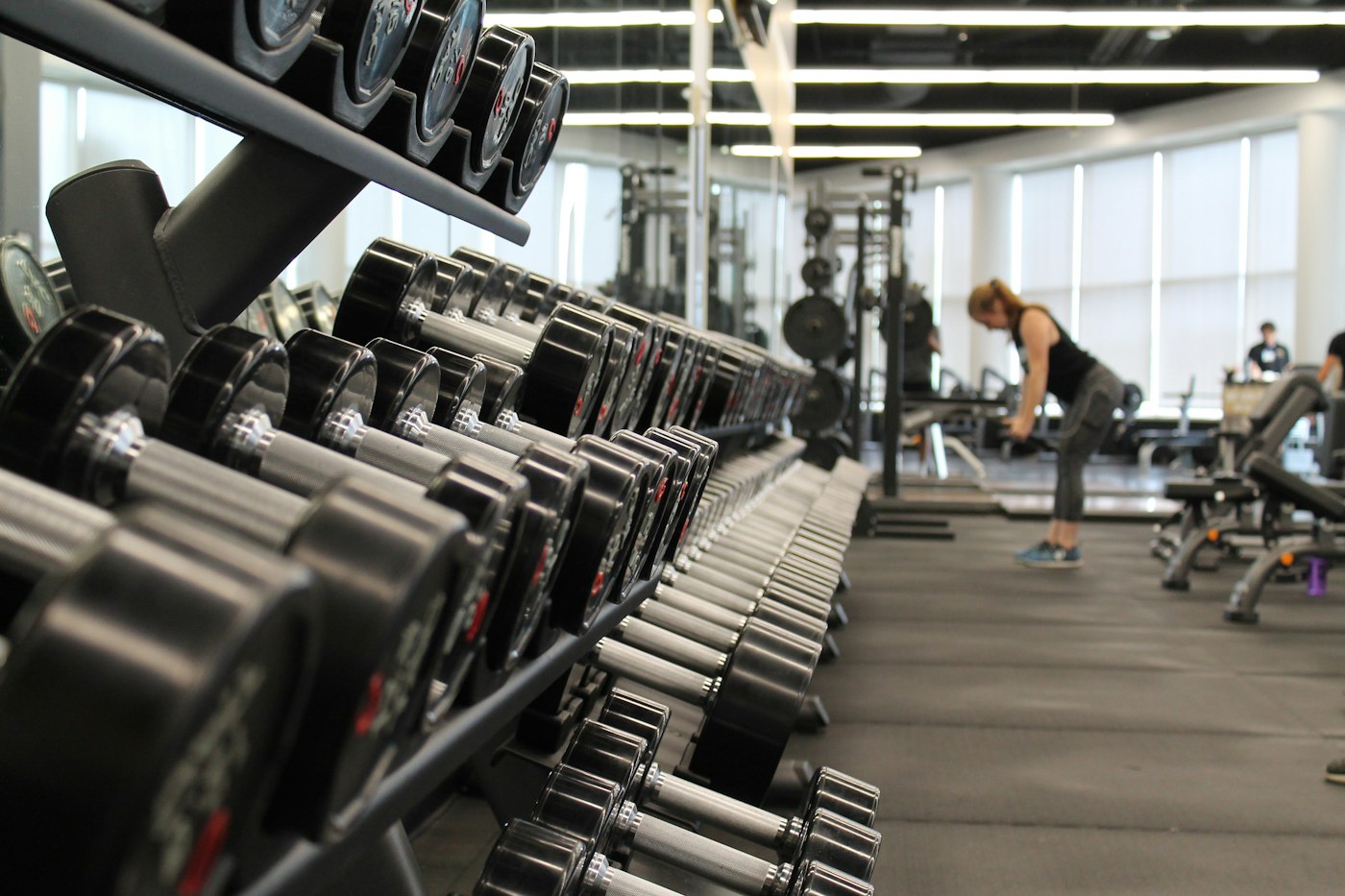
Photo by Danielle Cerullo / Unsplash
How to Stay Fit With a Desk Job: The No-BS Guide
You sit 8 hours a day. Here's how to build a realistic fitness routine around that — broken into three simple categories.
Most fitness advice is written by people who train for a living. Their schedules, their recovery, their meal prep routines — none of it maps to your reality.
You have 45 minutes for the gym if traffic cooperates. You're mentally fried by 5pm. And the last thing you need is someone telling you to wake up at 5am and eat chicken from Tupperware.
Here's the thing — getting fit with a desk job comes down to three categories. Nail these and you're ahead of 90% of people.
Move More (Training)
You don't need to live at the gym. Here's what actually moves the needle:
That number isn't a guess. Research consistently shows three resistance training sessions per week produces meaningful changes in strength and body composition. And 45 minutes is plenty when you focus on the right movements.
What to prioritize:
| Focus Area | Why It Matters | Key Exercises |
|---|---|---|
| Compound lifts | More muscles per movement = more results in less time | Squats, deadlifts, rows, presses |
| Posterior chain | Sitting weakens your backside — glutes, hamstrings, upper back | Hip thrusts, RDLs, face pulls |
| Targeted warm-ups | Your hips and shoulders need prep after 8 hours in a chair | Hip flexor stretches, thoracic rotations |
A simple week looks like this:
- Monday: Full body (squat, press, row, core)
- Wednesday: Full body (deadlift, overhead press, pull-ups, core)
- Friday: Full body (lunges, bench, rows, core)
Each session: 7 min warm-up → 30 min training → 5 min cool-down.
Eat Smarter (Nutrition)
Not "eat perfectly." Eat smarter. There's a massive difference.

Meal prep doesn't need to be 21 meals in matching containers. Start with 5 lunches.
The strategy that works for desk workers is dead simple: 5 good days buys you 2 flexible ones.
Monday through Friday, you eat well. Saturday and Sunday, you live your life. The math works — five disciplined days creates enough of a buffer that two relaxed days won't undo your progress.
The three rules that cover 90% of it
Rule 1 — Protein at every meal. It keeps you full, preserves muscle, and burns more calories during digestion. A palm-sized portion at each meal. That's it.
Rule 2 — Whole foods most of the time. You know the difference between a grilled chicken bowl and a bag of chips. Choose the thing that grew or lived over the thing that was manufactured.
Rule 3 — Stop at satisfied, not stuffed. Most people overeat because the food is there, not because they're hungry. Slow down. Stop at "comfortable."
Undo the Damage (Mobility)
This is the one most people skip — and it makes the biggest difference in how you feel day-to-day.
Sitting all day creates a predictable pattern of dysfunction:
| What Happens | Why It Hurts | The Fix |
|---|---|---|
| Hip flexors shorten | Pulls pelvis forward → lower back pain | Hip flexor stretch, 60s per side |
| Glutes stop firing | Lower back picks up the slack | Glute bridges, 3 × 30s holds |
| Upper back rounds | Tight chest → shoulder problems | Thoracic rotations, 10 per side |

The hip flexor stretch is the single most important movement for desk workers. 60 seconds per side, every day.
The routine:
- Hip flexor stretch — 60 seconds per side. Half-kneeling, squeeze the glute, lean forward gently.
- Thoracic rotation — 10 per side. On all fours, hand behind head, rotate toward the ceiling.
- Glute bridge — 3 holds of 30 seconds. Push hips up, squeeze glutes at the top.
Make It Stick
The biggest reason people fail isn't the program — it's showing up. The easiest fix? Attach new habits to things you already do:
- Drive home from work? Hit the gym on the way. Don't go home first — that's where the couch lives.
- Make coffee in the morning? Do your 5-minute mobility routine while it brews.
- Eat lunch at your desk? That's your meal prep target — 5 lunches on Sunday and you've won the week.
No alarms at 5am. No motivation speeches. Just one small thing attached to something you're already doing.
The Bottom Line
| Category | What to do | Time |
|---|---|---|
| Training | 3 sessions/week, compound lifts, targeted warm-ups | 45 min × 3 |
| Nutrition | Protein every meal, whole foods, 5/2 rule | No extra time |
| Mobility | Hip flexor stretch, thoracic rotation, glute bridge | 5 min daily |
That's the whole system. Not flashy. Not extreme. But realistic enough to sustain — and that's what makes it work.
Start here. Be consistent for 8 weeks. Then build on it.
Get smarter about desk-life fitness
One email per week. Practical tips, no fluff. Unsubscribe anytime.